
Friday, August 23, 2013

Saturday, August 17, 2013
Art is not Fun
Making art doesn't make me happy.
It's frustrating, time-consuming, fraught with failure, difficult, and often lonely.
I get a certain kind of satisfaction out of making art, though. I feel like a more valuable contributor to humanity. I feel like I'm on an upward trajectory.
A satisfying life is more than happiness. Art makes me feel more whole.
It's frustrating, time-consuming, fraught with failure, difficult, and often lonely.
I get a certain kind of satisfaction out of making art, though. I feel like a more valuable contributor to humanity. I feel like I'm on an upward trajectory.
A satisfying life is more than happiness. Art makes me feel more whole.
Sunday, July 7, 2013
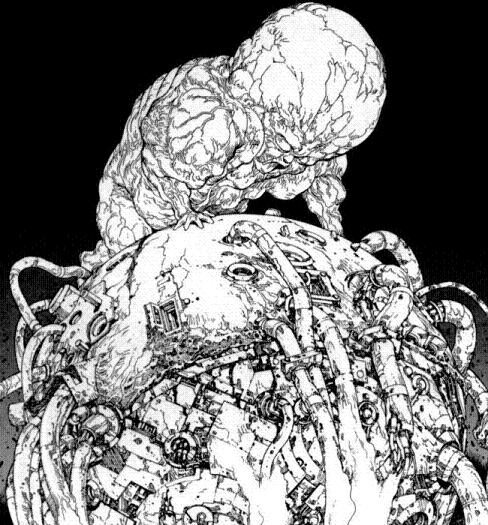
You Need to Read Akira
I've just been inspired and I think you can be, too.
Akira.
Not the movie. I'm talking about the Manga. 1982. Katsuhiro Otomo.
I just finished reading Otomo's 6 volume masterwork and was blown away by his mastery of perspective and virtuoso rendering. He draws his characters with real weight. The environments are meticulously crafted and engrossing. The pacing is exciting.
If you want some fuel for your artistic fire, I highly recommend that you dig up Akira and learn from a master.
Here's a taste:

Akira.
Not the movie. I'm talking about the Manga. 1982. Katsuhiro Otomo.
I just finished reading Otomo's 6 volume masterwork and was blown away by his mastery of perspective and virtuoso rendering. He draws his characters with real weight. The environments are meticulously crafted and engrossing. The pacing is exciting.
If you want some fuel for your artistic fire, I highly recommend that you dig up Akira and learn from a master.
Here's a taste:
Thursday, June 20, 2013
Inking with a Brush
I feel like I'm supposed to be using a brush to ink. The idea doesn't thrill me because I love the way I can bear down on a pen.
Lately, though, I've been using a Prismacolor Premier with brush tip for some of my inking. I still use the pens, but I incorporate the brush pen and the results are nice!
The Prismacolor is nice because the brush tip is very short, bridging the gap between a pen and a real brush.
You've gotta try a brush (at least a brush tip). Something about the brush adds an element of happy accident to the process. There is an unpredictability of line that adds a lot of value to the work.
Happy inking.
Lately, though, I've been using a Prismacolor Premier with brush tip for some of my inking. I still use the pens, but I incorporate the brush pen and the results are nice!
The Prismacolor is nice because the brush tip is very short, bridging the gap between a pen and a real brush.
You've gotta try a brush (at least a brush tip). Something about the brush adds an element of happy accident to the process. There is an unpredictability of line that adds a lot of value to the work.
Happy inking.
Tuesday, June 18, 2013
The Number One Goal of the Young Comic Book Artist
Get rid of the awkwardness in your drawings (unless it's working for you).
Thursday, June 13, 2013
Some Advice from Brandon Peterson
If you read the last post, you know I went to HeroesCon last Sunday and chatted with several artists, asking each one for a piece of drawing advice.
Brandon Peterson, who was putting some watercolor on a tremendously wonderful drawing of a girl in a space suit, said whatever that thing is you don't want to draw...you should be drawing it (my paraphrase, of course).
Brandon Peterson, who was putting some watercolor on a tremendously wonderful drawing of a girl in a space suit, said whatever that thing is you don't want to draw...you should be drawing it (my paraphrase, of course).
Tuesday, June 11, 2013
Some Advice from Jenny Frison
I went to HeroesCon in Charlotte, North Carolina Sunday and chatted with several artists. Not knowing what to say to a boat load of great artists, I asked a few of them to share a piece of drawing advice. Jenny Frison (a great cover artist) said to draw all the time, because the only way to get to the good stuff is to slog through the bad (my own paraphrase).
Good advice if I've ever heard it.
Good advice if I've ever heard it.
Thursday, June 6, 2013
Don't Use Your Rough Drafts
The first version of a story is the rough draft. Once the ideas are down on paper, the writer then rearranges, rewords, and reworks the text until it's efficient and effective.
Artists are often guilty of using rough drafts.
Artists are often guilty of using rough drafts.
Wednesday, June 5, 2013
Something I Learned from Seth Godin
Post number 100!
By the way, I update this blog every Tuesday and Thursday.
I've been preparing for Heroescon in Charlotte this Sunday. I also drew up 4 new comic pages while putting some time in on a logo for a veterans transition program. Busy week!
I will post some drawings tomorrow.
Until then, remember this one piece of advice I learned from Seth Godin. Push towards the edges.
Thursday, May 30, 2013
Don't Try to Solve 2 Problems at Once
The number 1 tip I can offer to help you in your art projects:
Don't try to solve 2 problems at once.
You're creating something and notice that it's too busy, the lines are boring, and the composition could be better. Don't work on all 3 issues at the same time. Fix the composition, then adjust the business, then improve the lines.
Fix something, then move on to the next thing. Then, do it again. Then, again until you run out of time or things to fix.
Don't try to solve 2 problems at once.
You're creating something and notice that it's too busy, the lines are boring, and the composition could be better. Don't work on all 3 issues at the same time. Fix the composition, then adjust the business, then improve the lines.
Fix something, then move on to the next thing. Then, do it again. Then, again until you run out of time or things to fix.
Wednesday, May 29, 2013
Are You Afraid to be Critiqued?
You need more critique, not less.
If you're not out there, you're not making a dent.
If you're not out there, you're not making a dent.
Thursday, May 23, 2013
The Real Secret of Drawing
I've been on vacation this week, which is always glorious simply because I do exactly what I want. No responsibilities and no worries.
I didn't touch a pencil for 5 days.
When I picked it back up yesterday I was reminded of one of the greatest drawing lessons you can learn.
To draw well you have to think well.
Your mental approach to drawing is more important than the way you move the pencil. Good art is mainly a series of good decisions. How do you set up the compositions? Where do you put the shadows? How do you most effectively depict a scene or action?
Beyond that, intelligently naming your problems is the key to solving them. Too busy? Awkward posing? Flat drawing?
If your drawings are suffering, begin to explicitly name the problems and apply your best logic to every artistic decision. Begin to make sound artistic choices.
And now, back to the beach.
I didn't touch a pencil for 5 days.
When I picked it back up yesterday I was reminded of one of the greatest drawing lessons you can learn.
To draw well you have to think well.
Your mental approach to drawing is more important than the way you move the pencil. Good art is mainly a series of good decisions. How do you set up the compositions? Where do you put the shadows? How do you most effectively depict a scene or action?
Beyond that, intelligently naming your problems is the key to solving them. Too busy? Awkward posing? Flat drawing?
If your drawings are suffering, begin to explicitly name the problems and apply your best logic to every artistic decision. Begin to make sound artistic choices.
And now, back to the beach.
Sunday, May 12, 2013
I'll Tell You What's Stupid
I just want to know that there are people out there who can relate to this.
I drew a picture yesterday and hated it.
I woke up this morning and like it.
sigh
At least I like it now! Better than the alternative.
I drew a picture yesterday and hated it.
I woke up this morning and like it.
sigh
At least I like it now! Better than the alternative.
Saturday, May 11, 2013
A Tip for Improving as an Artist
One of the best pieces of advice I ever heard...
If you're not getting the results you want, do something different.
How often do we forget that?
If you're not getting the results you want, do something different.
How often do we forget that?
Friday, May 10, 2013
Choosing Lines
Wave after wave of drawing inspired frustration combined with some Paul Pope, Ashley Wood, and Jamie Hewlett has taught me that I don't really understand what lines look good in a drawing.
Time to reset my instincts.
Sunday, October 21, 2012
First Principles

The other I was struck by an idea.
It's one of those ideas that a lot of you will probably read and think, "Uh, yeah. That's obvious."
But maybe, just maybe, this particular thought will revolutionize your artistic process.
In every activity there are some very basic, fundamental principles -- First Principles, as I will refer to them.
I was struck by the revelation that I don't consciously follow the First Principles of art.
What I mean is that I create art on a sort of auto-pilot. I can look at an image and know that something irks me, but I usually don't verbalize the specific problem.
And that's a big problem itself.
I realized that unless I name the problem specifically I can't solve it efficiently. Often, to name a problem is to know how to solve it.
My current goal is to make every artistic decision justifiable. That means if you asked me why I made any particular artistic decision I would be able to explain it to you and my argument wouldn't fall apart once it was verbalized. ( I don't know about you, but I sometimes find that the opinions I half-consciously hold to sound much less compelling when I speak them to someone else.)
The takeaway is this: Name your issues. What bothers you about your piece? Is it too busy? Does it lack contrast? Are the strokes messy?
Also, if you're having trouble determining what to do next on a piece, perhaps you should go back to the basic questions. Is this piece balanced? Is there enough contrast (contrast of tone, size, texture,etc.) to make it interesting? Does it lack variety or rhythm? Is the composition weak?
It all comes down to sound thinking and decision making -- i.e. good judgment.
Sunday, July 8, 2012
Stumped
What do you do when you're stumped?
Maybe you've been in a situation like one of these:
What do you do when you're stumped?
When you're stumped, you're butting up against the limit of your knowledge, creativity,
and skill. It's like a bodybuilder trying lift as much weight as possible. It's hard because he's
doing all he can do. A bodybuilder can't lift more by trying harder, he has the muscles
or he doesn't.
The reason is that being stumped is primarily a thought problem. You can't overcome
your current limits until you change the way you think.
So the best thing you can do when you're stumped is to figure out how to adjust
your thinking to get a better result.
Making art is fundamentally about decision making and problem solving. Every line you
place on the paper is a decision. When something doesn't look as good as you'd like,
that means you have room to make more effective artistic decisions.
So how do you fix it?
Try this: Find someone out there who is doing the kind of work you want to do
and read anything they've written or said.
The goal here is to figure out how they approach their art. You want to get inside their
head. Follow their reasoning - discover why they choose one thing over another - figure out
how to adapt their thinking into your own work.
The problem in making art is never simply a lack of skill. It's a lack of proper thinking.
Don't grind away at the same problem over and over hoping to get lucky. Figure out
the weak points in your process and patch them. Get some perspective on your own
artistic problems by seeing how other artists tackle theirs.
Maybe you've been in a situation like one of these:
- You're working on an image for someone but you can't get it right. You've redrawn the same image 3, 5, 10, or even 20 times and it's just not working.
- You're working on something and you reach a point where you don't know what to do next. You know the piece isn't ready, but you don't know how to proceed.
- You're trying to solve some artistic problem, but you can't seem to find a good solution
What do you do when you're stumped?
When you're stumped, you're butting up against the limit of your knowledge, creativity,
and skill. It's like a bodybuilder trying lift as much weight as possible. It's hard because he's
doing all he can do. A bodybuilder can't lift more by trying harder, he has the muscles
or he doesn't.
The reason is that being stumped is primarily a thought problem. You can't overcome
your current limits until you change the way you think.
So the best thing you can do when you're stumped is to figure out how to adjust
your thinking to get a better result.
Making art is fundamentally about decision making and problem solving. Every line you
place on the paper is a decision. When something doesn't look as good as you'd like,
that means you have room to make more effective artistic decisions.
So how do you fix it?
Try this: Find someone out there who is doing the kind of work you want to do
and read anything they've written or said.
The goal here is to figure out how they approach their art. You want to get inside their
head. Follow their reasoning - discover why they choose one thing over another - figure out
how to adapt their thinking into your own work.
The problem in making art is never simply a lack of skill. It's a lack of proper thinking.
Don't grind away at the same problem over and over hoping to get lucky. Figure out
the weak points in your process and patch them. Get some perspective on your own
artistic problems by seeing how other artists tackle theirs.
Saturday, June 23, 2012
Why Your Drawings Don't Work

If you're like me, you've probably made a lot of drawings that just don't work.
You look at them - study them. The anatomy seems accurate. You've used interesting lines. You've tried to inject some style.
But, it's just not working.
Then you bang your head on a table or a wall and wonder, "What am I doing wrong??"
Well, I think I may have an answer for you.
I've been more of an illustrator than anything for years. But, last year, I took a job as a Graphic Designer. Working as a designer for the past year has taught me a crucial lesson that I was missing as an illustrator.
Your drawings must have an overall sense of pleasantness. We all know that somewhere, but follow me.
The individual lines are important only inasmuch as they contribute to the attractiveness of the entire image. I now approach drawings in the same way as I approach graphic design.
What that means is that I try to create a natural flow.
All lines are roads.
A road takes you to a place. All of the lines in your drawing are guiding you somewhere. Knowing this, you can make all the lines in your piece work together to guide the viewer.
So, if you're drawings just aren't working, remember 2 things:
1) The entire composition should be pleasant as a whole.
2) The entire composition should have a natural flow - a path your eyes follow.
Try that and see if you don't improve instantly.
Friday, June 8, 2012
Art is Diffusion

I love that word, "Diffusion."
Diffusion means "to spread."
We live in a world of increasing connectivity. Ideas are everywhere and they are easier than ever to spread.
Distance means nothing.
To be an artist now is to have a global audience. I live in Georgia, but I've worked for people in Germany and Denmark. I didn't have to jump on a plane or even make a phone call.
Seth Godin tells us that an idea that spreads wins.
We artists are in the diffusion business. Our art speaks. Our art is our idea and our job is to spread it.
If your art spreads, you win.
Friday, June 1, 2012
New Bill Watterson Art
Checkitout:
http://illustrationfriday.com/blog/2011/04/22/bill-watterson-covers-cul-de-sac/
New artwork from Bill Watterson! (the Calvin and Hobbes guy)
http://illustrationfriday.com/blog/2011/04/22/bill-watterson-covers-cul-de-sac/
New artwork from Bill Watterson! (the Calvin and Hobbes guy)
Subscribe to:
Posts (Atom)